

Outsourcing Medical Billing in 2025: Hidden Costs vs. Real Gains
- TronsIT Solutions
- 0 Comments
The U.S. healthcare system continues to face a dual challenge: growing administrative complexity and declining reimbursement rates. In this environment, more medical practices, hospitals, and clinics are leaning toward outsourcing billing operations to cut overhead and boost efficiency. However, before jumping on the bandwagon, it’s crucial to weigh the hidden costs against the real benefits of such a move.
By 2025, medical billing is no longer be just about submitting insurance claims. It involves real-time eligibility checks, coding accuracy, regulatory compliance, and timely patient communication. Minor errors can lead to massive delays or denials. That’s why providers are increasingly trusting specialized third-party vendors who can manage the entire revenue cycle with the precision of a tech-enabled team.
Still, outsourcing isn’t always a slam dunk. While it may offer lower staffing costs, fewer billing errors, and faster reimbursements, it can also introduce issues such as a lack of control, reduced customization, and potential patient dissatisfaction. That’s why understanding the possible risks of outsourcing billing is just as important as knowing its benefits.
In-House vs Outsourced Billing: What the Numbers Say
To make the best decision, it helps to put in-house billing and outsourcing side by side. Here’s a practical comparison of the two models based on key performance and cost metrics for U.S. practices in 2025:
Criteria | In-House Billing | Outsourced Billing |
Upfront Cost | High (Hiring, software, training) | Low (Minimal setup fee) |
Operational Control | Full control | Limited control |
Error Rate | 5–10% | 1–3% |
Collections Speed | 30–45 days average | 15–25 days average |
Scalability | Low without hiring more staff | High scalability |
Patient Satisfaction | Personalized communication | May vary based on vendor |
While outsourcing usually offers better scalability and error reduction, in-house medical billing comparison reveals that control and patient rapport are often stronger when handled internally.
The ideal choice depends on your practice size, growth plans, and internal bandwidth. Smaller clinics seeking to reduce costs quickly may benefit from outsourcing, whereas larger networks with complex billing structures may still find value in maintaining in-house operations.
Medical Billing Industry Trends 2025: What's New?
If you’re still undecided about outsourcing, consider where the industry is headed. The 2025 medical billing industry trends show a definitive shift toward automation, AI-driven analytics, and comprehensive RCM (Revenue Cycle Management) platforms. These platforms not only handle billing, but also integrate patient engagement, data reporting, and compliance tools—all under one umbrella.
Moreover, payer-provider relationships are becoming more digital. New CMS interoperability rules and value-based care models demand a billing system that’s agile, automated, and error-proof. Traditional in-house billing teams often lack the tools to keep up, making outsourcing an increasingly appealing alternative.
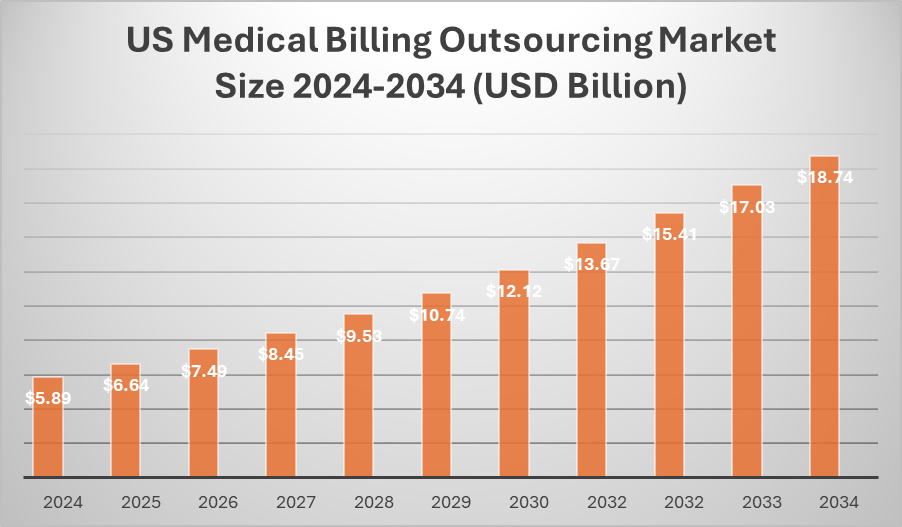
Additionally, medical billing vendors now offer tiered service models, ranging from basic claim submissions to comprehensive RCM management with analytics dashboards, allowing providers to choose the service that best suits their needs.
Hidden Costs and Potential Risks of Outsourcing Billing
While outsourcing medical billing can save time and reduce overhead, it’s not without its pitfalls. The potential risks of outsourcing billing include a loss of internal oversight, slower patient dispute resolution, and dependency on vendor performance. Some vendors also charge hidden fees for items such as reporting tools, additional coding, or EHR integrations, which can impact your bottom line if not carefully negotiated upfront.
Another issue? Data security. With HIPAA enforcement becoming more stringent, providers must ensure that their billing partners use encrypted platforms, offer audit trials, and comply fully with federal and state data protection laws.
Some practices also report reduced patient satisfaction due to impersonal communication from third-party billing departments. Since billing conversations often impact the patient’s experience, having a partner who understands your tone and values is critical.
Here are some common “hidden” factors you should account for:
- Transition time and training
- Contract lock-in periods
- Lack of transparency in reporting
- Data migration and tech compatibility costs
- Potential vendor underperformance
The key is choosing a vendor that aligns with your goals and communicates clearly—and frequently.

The TronsIT Solutions Approach to Smarter Medical Billing
Choosing the right partner for outsourced billing can be the difference between chaos and clarity. That’s why TronsIT Solutions stands out in the crowded U.S. market. Their approach goes beyond claim processing. They offer a holistic, tech-enabled RCM service designed to scale with your practice while reducing errors and improving reimbursements.
With expertise across private practices, urgent care, specialty clinics, and hospital networks, TronsIT Solutions provides:
- Seamless EHR and PMS integration
- HIPAA-compliant, secure cloud-based platforms
- Transparent reporting dashboards and real-time analytics
- U.S.-based support with fast dispute resolution
- Adaptive service plans for clinics of all sizes
Whether you’re outsourcing for the first time or switching vendors in 2025, TronsIT Solutions combines automation, expertise, and customer-first service to deliver real gains—without the hidden costs.
Final Thought
Outsourcing medical billing in 2025 is no longer a novelty—it’s a strategic decision. With the increasing complexities in healthcare revenue management, practices must weigh the hidden costs against the real benefits to determine the best path forward. Whether you’re exploring this for the first time or refining an existing process, partnering with a transparent, tech-savvy provider like TronsIT Solutions ensures your billing supports your growth—not hindering it.
For more informative blogs, explore our website!
Related Posts
How to Eliminate Claim Denials in 2025: A Proven RCM Framework That Works
- TronsIT Solutions
- June 6, 2025
In 2025, the healthcare industry will continue to face a long-standing and costly problem: clai ..
Best Healthcare IT Solutions for Small Clinics in 2025
- TronsIT Solutions
- May 5, 2025
By 2025, healthcare IT solutions for independent practices will be essential to contemporary cl ..

